Sunday Sermon
Bringing Home the Mountain
We had our usual Sunday morning boomerang throw. Had 7 throwers on the suicide round... pretty crazy, but a lot of fun.
After that, I went hiking with Mark, Ben, Nicole, Julia, and Clay. The past few years of sedentary academic pursuit have left my once athletic frame a shambles, and my always fragile knees are now many miles past their warranty. The snow on the trail made footing sketchy, and every time I slipped I would brace myself for that odd ripping/popping/exploding sensation that accompanies an ACL tear. That discomfort aside, it was beautiful. The views were spectacular, and the weather was wonderful.
The mountains always seem to bring the mind to a clearer place. It is no surprise that holy men throughout history have made trekked up into the mountains to search for God, themselves, truth, and peace.
Perhaps spurred on by that rarified air, Julia and I talked religion. The hows and whys of it, the role of women, and her refusal to accept rules just for the sake of rules. Soon we asked Clay to join us and the discussion ranged far and wide, from LDS doctrine and pratice to the Jataka tales to core ideas about life, eternity, and death... all while slipping and sliding down the slushy slope, heading for the cars.
We arrived at no consensus. We started the discussion as Agnostic, Buddhist, and LDS, and we ended there as well. And that was OK. The view from the mountain made it clear that our different positions are just different facets of the same reality, seen from where we are standing at the moment. All we can really do is roll the die and read the face that comes out on top.
I'm going to work on remembering that. I'd like to have that "mountain view" all the time, even here on flat ground.
Go in Peace.


Feeling kind of mean today...
On the back cover of "The Watchtower" (the semi-monthly publication of the Jehovah's Witnesses) I found the following:
"Would you Welcome a Visit?
Even in this troubled world, you can gain happiness from accurate Bible knowledge of God, his Kingdom, and his wonderful purpose for mankind. If you would welcome further information or would like to have someone call at your home to conduct a free Bible study with you, please write to Jehovah's Witnesses at..."
Are you thinking what I'm thinking? I'm thinking that you could sic the Jehovah's Witnesses on anyone... Just send off a convincing letter, then sit back and watch while the hilarity ensues.
"Dear Jehovah's Witnesses,
I would love to have a Bible Study in my home. I have an odd work schedule, so please come early on a Saturday, perhaps around 5:30 A.M.
Sincerely,
____________"
Gotta' go. I've got some letters to write...
(Click here for an example of a JW Bible study... not.)
Questions of Faith, Part VIII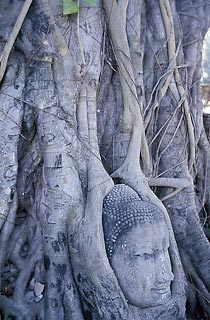
This installment is by yours truly. I hope you find it enlightening... and if you find errors they are entirely mine; evidence of my poor scholarship, that should in no way reflect badly on my teachers.
Spelling disclaimer: Since many of the terms I'll be using here are transliterated from Sanskrit, Japanese, and Chinese, the spellings are quite flexible. I have tried to use the most common spellings, but you will no doubt see different spellings of the same words. My apologies for any confusion.
What faith do you espouse?
I am Buddhist. There are many flavors of the Path Buddha, but these responses are based mostly on my study of Zen Buddhism, as taught in the U.S. by Robert Aitken Roshi, Philip Kapleau Roshi, and many others.
Who was the founder of your faith? When did he/she live?
Technically, the term "Buddha" simply means, "awakened one" or "one who thus comes" and there have been many Buddhas, and there will be many more. However, when we refer to THE Buddha we are usually speaking of Siddhattha Gotama, a prince born to the Shakya clan around 623 B.C. in the Lumbini Park at Kapilavatthu, an area that is now on the border of Nepal in India. He is also commonly called Shakyamuni, which means, "Sage of the Shakya Clan."
Shakyamuni Buddha
There are many fine books, movies, and websites that tell the Buddha's life story, so I won't try to do it here. The key elements are that at 29 he left home to seek a cure for the affliction of suffering, he tried many different ascetic practices, and eventually he discovered the "Middle Way", which he later expounded as "the Noble Eightfold Path" that is the core of Buddhism.
What are the sacred texts of your faith?
There are many. The Buddha himself did not write anything, but his disciples began to commit his teachings to paper (well, to leaves, actually...) after his death because they feared they would be lost. There are also writings that are not teachings of the Buddha but were penned by later masters, that are also considered a part of the cannon of Buddhist scripture. 
Tibetan boys study the sutras
There are three main schools of Buddhism - Theravada, Mahayana, and Vajrayana - and they each emphasize different writings.
Theravada
Main scriptures: The Tipitaka
Most Popular: The Dhammapada - The Sayings of Buddha (one of my favorites)
Mahayana (this includes Zen)
Main scriptures: The Sutras (sacred texts)- 2184 sacred writings.
Most Popular: The Lotus Sutra - A sermon by the Buddha on the Bodhisattva, buddha-nature, etc.
The Perfection of Wisdom Sutra (Prajna-paramita)- Describes emptiness and other key philosophical concepts.
The Heart Sutra- Describes nirvana, emptiness, and Ultimate Reality.
The "Land of Bliss" Sutra - Describes the Pure Land of Amitabha Buddha.
Vajrayana
Main Scriptures: The Tantric texts and commentaries- Deals mainly with Ultimate Reality as singular Unity, and the sexual union of world (male) and cosmos (female).
Most Popular: Great Stages of Enlightenment - Deals with ethical behavior and control of mind.
Tibetan Book of the Dead - Deals with stages of dying, death, and rebirth.
What is the central teaching of your faith?
The Buddha's teachings are deceptively simple. The whole of Buddhist philosophy is summed up in...
The Four Noble Truths
1)Suffering exists - sometimes translated as, "To live is to suffer."
2)Suffering arises from attachment to desires - or, "We suffer from our wants."
3)Suffering ceases when attachment to desire ceases - "It is possible to end suffering."
4)Freedom from suffering is possible by practicing the Noble Eightfold Path - "The end to suffering is the Noble Eightfold Path."
and
The Noble Eightfold Path
Right Understanding
Right Thought
Right Speech
Right Action
Right Livelihood
Right Effort
Right Mindfulness
Right Meditation
I feel that I should clarify something right here, before it becomes a problem for you. Most Western readers latch onto the third noble truth and say, "this is impossible! I'll never be free from my desires - in fact, I LIKE my desires, so Buddhism is not for me." What they are missing is that the Buddha never said we should give up desire - partly because he knew that was impossible. He simply said we can stop suffering from it. By practicing the Eight Fold Path, we can feel desire without being attached to it.
As for the specifics of the Eightfold Path, again I will defer to the many fine texts on the subject. A basic primer can be found here.
How does your faith define sin? What are the major sins, and how is
one absolved?
If you search a database of Buddhist texts, you are unlikely to find the word "sin" unless the translator is trying to present Buddhism in Judaeo-Christian terms. There are simply actions that lead toward Enlightenment, and those that do not.
That is not to say that there is no code of ethics in Buddhism - there is, and it is summed up in the Eightfold Path. Individual schools of Buddhism have written lists of rules to make it easier for followers, but they are all just rewordings and logical extensions of the Eightfold Path. These vary greatly in specificity. Where Zen has its Ten Grave Precepts, the Thai Forest Monks adhere to the Vinaya - a core of 227 Paatimokkha rules, together with many other ordinances for the right living and harmony of the community of monks.
Buddhists generally don't think in terms of absolution. Because most Buddhists believe in karma, it is attonement that matters most. In a gross oversimplification of the doctrine of karma, I'll simply put it this way - Evil deeds are balanced or erased by good deeds. As Mark once said to me, "Karma is like moral gravity."
Roughly how many adherents does your faith have?
Around 350-360 million - about 6% of the world's population. An increasing number of them reside in the West.
What are the practices of your faith? (Daily, weekly, etc.)
The practices vary for each school, but the common thread is meditation. Because this was the method by which the Buddha achieved enlightenment, meditation is considered the primary practice of most schools of Buddhism. 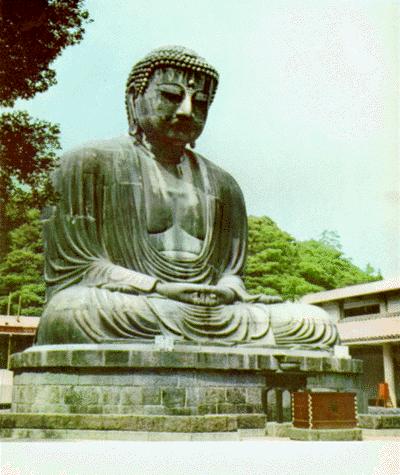
This is the posture of zazen (seated meditation)
In Zen, it is called zazen, meaning "seated meditation," and it is referred to casually as "sitting." I thought I'd clarify this point because it can sound very odd to those outside the practice. This coversation is an example;
"What did you do yesterday?
"I sat."
"Cool. I wish I had time to sit more. I sat last week at the Zendo (Zen temple). My sitting was so poor they used the kyosaku ("encouragement stick") on me."
"I've been spending more time on my sitting, and I think it's helped. I sat very well yesterday."
That sounds perfectly normal to a Zen Buddhist, but it has been the cause of more than a little confusion with my family. My grandmother never understood how I could go to the Zendo and "pay for the priveledge of sitting on their cushions."
Most Zen practitioners try to sit daily. Some like to sit twice a day, in the morning and evening. Average duration is about 25-30 minutes per session. A person living in a monastic setting may sit as much as 6 hours per day during the regular periods of the year, and up to 12 or 14 hours per day during the one week intensive periods called sesshin. The biggest sesshin of the year is called Rohatsu, and it commemorates the Buddha's enlightenment. It is normally held in December.
One important note on sitting. Anyone can sit. You do not have to consider yourself a Buddhist, or renounce your current path. Many faithful adherents of other faiths find Buddhist meditation to be a usefull adjunct to their own practices. One of the Roshis at the Zendo in L.A. that I used to attend is also a practicing Rabbi, so clearly there are no prohibitions on practicing other religions at the same time.
What does your faith teach about the afterlife? Is there heaven, and
how do you get there?
Most Buddhists believe in reincarnation, and also in escaping the cycle of death and rebirth. There are voluminous treatises on this esoteric area of Buddhist philosophy, but Zen Buddhists have taken a very practical approach to it. We belive that although you may have had many thousands of previous lives, and you may have many more to come, the one that matter most is THIS ONE. Time spent speculating about karma, past and future incarnations, and all the other logistical and metaphysical ramifications of reincarnation is time that COULD have been spent sitting!
How is your faith organized? Are there priests and bishops and
archbishops (oh my!)?
In America the organization of Zen is very loose. It is based on lineage, so temples usually are identified by the Master who founded them, and any famous or important teachers in that Master's lineage. Because most temples in America are relatively young (less than 30-40 years) the lineage usually only goes back one generation. In Asia, it is another story. The recitation of lineage can take quite a while, and monks pride themselves on being able to recount the history of their monastery back into the mists of antiquity.
The only really important titles in Zen are Roshi and Sensei. Roshi means "old teacher" and denotes a fully realized master - that is, one who is fully enlightened. Sensei refers to teachers who may have had an enlightenment experience, but whose vision is still maturing. These titles are conferred after examination by an existing Roshi.
Are there regular services available to you locally? If so, where?
There is a sitting group in Laramie, but I have been told that they are practicing in the Theravada style, not Zen. There is a tiny little Zendo down in Fort Collins that I used to sit at every morning, and it is affiliated with a big Zendo in Denver, but both are a bit of a drive for daily practice.
There has been talk of starting a regular sitting group for the Flock... let me know if you are interested.
How did you come to be a believer?
One of the beauties of Buddhism is that belief is not essential. Try it - if you find that it helps, keep doing it. That's what happened to me. I tried seated meditation and liked the way I felt afterwards. I was calmer, clearer, and more focused, so I kept doing it. Nothing fancy, no thunderous religious expereince - just a simple assessment of the results.
What do you wish others knew about your faith?
We do not worship the Buddha as a god. He was a human - in fact, only humans can become Buddhas.
We are not all bald monks.
We are not all vegetarians.
We are not all martial arts masters (although that would be cool...).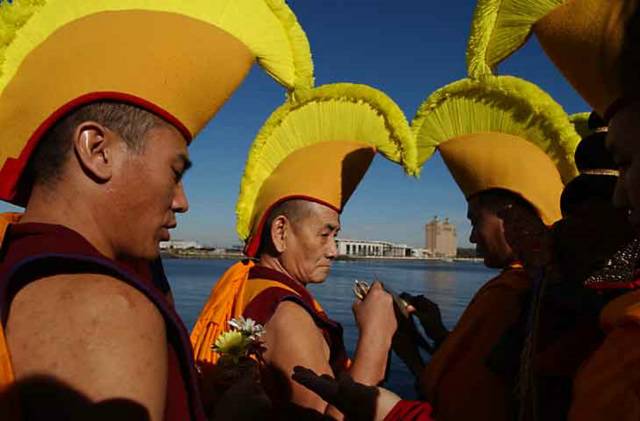
Buddhists have the best hats...
Those deeply embroiled in religious discussions are encouraged to continue below. For the rest of us, it is time to play
Guess what's in the Reverend's pocket!*
Clues:
I am wearing a black utilikilt.
I am referring to my left pocket.
It is not a knife (it's on my belt today).
It is not, nor was it ever, alive or edible.
It is snowing as I write this.
Somewhere, as you read this, Prince is still trying to grow a moustache.
It is not a soothing salve of any kind.
A personalized blessing from the Black Pope will be given for the most inventive answers, and the person who posts the correct (or closest) answer will receive a fabulous prize!**
For 5 extra Salvation Points, what is different about my blog today?
*For amusement purposes only - please, no wagering.
**The International Ministry of Linus and Black Vatican Inc. may hold to a different definition of "fabulous" than that to which you are accustomed. If you win, you'll take what you get and you'll like it, capiche?
Questions of Faith, Part VII
For the Sunday Sermon this week, we will hear from another Earth-honoring tradition. The Pink Princess, Mandy, gives us a brief overview of Wicca. As usual, feel free to comment!

Wiccan ritual implements
What faith?
This response took much longer than I thought. I found myself trying to cover both Wicca in general and my own beliefs. While extremely similar, I don’t feel right just giving my beliefs and letting you (as readers) think that what I say goes for the majority of the Wiccan community. It doesn’t. There are just too many ways of personalizing this religion to give you everything you will need.
If I must choose a title for my religion, I will go with Wicca, as most of my beliefs find their roots in Wiccan teachings. Why? I have done a lot of searching when it comes to religions and have taken to heart the parts that affected me. No matter what religion they came from they became part of mine. My personal beliefs include the notion that all things have a spirit. My path has space for Goddess and God, as well as a myriad of other spirits/minor deities. Other paths choose their own combination, select few, or single deity that suits them.
Who is the founder?
The founder of my faith is hard to point to as Wicca, like many earth religions, was part of the daily lives of many people long ago. My personal beliefs are gathered from Celtic and Viking influences.
The Neo-Pagan or New Wiccan movements that most people are aware of are quite recent. The religions were re-found by several different people including Gerald Gardner, Alexander Saunders, and Alistair Crowley. These traditions all formed sometime between the 1940’s and the 1960’s.
What are the sacred texts?
Most Wiccans will keep a “Book of Shadows”. This is a spooky, mysterious name for a book that is very similar to a journal. Recipes, journal entries, dreams, anything deemed important can be put in.
The Rede and the Three-fold Law also qualify as sacred texts.
Central Teaching?
No matter which tradition or branch a Wiccan follows, the central teachings are generally the same. Most traditions will include some form of the Rede and the Three-fold Law.
Travis, in his earlier response, included the whole of the Rede, but just as a reminder – “If it harms none-Do what you will.”
The three-fold law is exactly what it sounds like. Ever hear the phrase “Good (bad) things come in threes”? This is where it came from. Any energy you send/give out will come back to you three-fold. Basically, it is a reminder to treat others as you want to be treated.
Sin?
This is where it gets tricky. The actual concept of sin does not exist in this religion. There are, however, things you just shouldn’t do. How do you know what these are? Look to the three-fold law and Rede. If you are doing something that will hurt someone or yourself, intentionally or not, this is not a good plan. The Powers that Be will see that the negative energy and pain will be returned to you (3 times).
Afterlife?
Some paths include the idea of a Summerland which is very much like a Utopia or Heaven concept. Your spirit will get there when it is time for it to get there. It may take many lifetimes or just one. This leads to the question of reincarnation. Yes, many Wiccans, including me, believe in reincarnation. But unlike that of other religions starting another life may have nothing to do with unfinished tasks and/ or karmic deeds. In some cases it may not be your spirits time, you may have learned what you need to learn in this life, you may not have learned what you needed to in the last life… there are hundreds of reasons why a spirit will/ can come back. The death of a person is not neglected however. Death is part of the life cycle, all things in nature die. The person is mourned, remembered and celebrated.
Practices?
Depending on your tradition there are opportunities for daily, weekly, and holiday specific rituals. Holidays are centered on the seasons, moon phases, and equinoxes.
Personally, daily (if not then weekly), I find time to sit and meditate, dream journey, and work with anything else I need to.
Organization?
As I practice mostly by myself there really is not hierarchy. Many who practice in groups do have some form of structure. Usually these groups are called Covens, and there tends to be at least one High Priestess leading the group. There is the possibility for Priests, (regular) Priestess, and any other forms of division deemed necessary.
Regular services?
Yes there are. As a solitary practitioner opportunities always present themselves. For others….there are gatherings on a weekly basis, as well as on the holidays, for anyone who wants to join. Being respectful of the various earth religions is the only requirement.
What do I want others to know?
Just to dispel some myths and stereotypes I have encountered.
- Please don’t ask if I am a good witch or a bad witch. Not only do I not identify myself as a witch…but that is like asking “Are you a good Methodist or a bad Methodist?” There are good people and bad people in every society and in every religion. (It is a funny question though, if you get the reference.)
- I don’t worship Satan. I believe each person is responsible for his or her own actions. Satan is a Christian angel. So, in a sense all Satanists are Christian.
- The Pentagram is not a Satanic symbol. The symbol has a long history of being used to mean many good things such as health (Pythagoras and his followers wore it for this reason), and protection (in Medieval time Christian knights would wear it on their shields). The five points represent the four elements- air, fire, water, earth – and the top point is spirit.
- I do NOT do blood sacrifices! I believe in the sanctity of all living creatures. This is also the thoughts of most other traditions.
- Spells, at their most basic, are nothing more than wishes, hopes, and prayers. At times special herbs or other ingredients will be added as a “sacrifice” or offering to help the spell manifest. I will not cast a spell on anyone or for anyone. I won’t hex anyone; I don’t want the three fold law to bite me.
- Ritual Orgies? For this I will take an answer from a Wiccan website that answers it better than I can. “Orgies? These are rumors come from our lack of taboos regarding sex. We have no rules which prohibit homosexuality, nudity or pre-marital sex. Sex as the generative force in nature is seen by most pagans as something utterly sacred. We feel that the physical act of love is to be approached with great respect and responsibility.”
- Not all Wiccans wear black. I have an affinity for being as brightly colored as I can be. Black rarely enters my clothing except to bring out a different color, or for dress-up/club type clothes. I don’t even own any pentagram jewelry or a pentagram at all for that matter.
- Men, women, and children can all be witches, Wiccans, Pagans. There is no sex based distinction. The term Warlock, generally used for males, is a derogatory term, a religious slur. Warlock is an old Scottish word meaning traitor or oath-breaker.
- I (we) don’t convert new Wiccans/Pagans. To do so would be a form of bigotry. It would value one religion over another. Trying to convert someone is assuming that the person’s beliefs are not as valid as your own.
----------------------------------------------------------------------------------
If you have a personal question for Mandy, feel free to send it to the Email address in my profile, and I'll forward it along to her.
Questions of Faith, Part VI.V
Thanks to Clay for such a complete picture of his faith, and to everyone who responded with questions - keep 'em coming!. Clay's answers were a bit too long for the comment window, so they are posted here - the questions that spawned these answers can be found in the comment window for his original post.
------------------------------------------------------------------------------
In response to Linus:
Wow, so many questions already. Yell at me if I forget any...
I believe people calling us Mormons came about simply because Joseph Smith introduced this radical new concept (a religious text beyond the Bible?! Blasphemy!) to America in the form of the Book of Mormon. They quickly latched on to one of our more distinguishing features that they knew of and associated us with it.
Yes we still have family home evening--a night set aside to spend with family, sharing spiritual thoughts and having food and fun.
Proxy baptism: Because those of us that have died may still want to accept the ordinances of the gospel (remember, we think the other dead have ministries among them), but have no bodies to do so (it's hard to immerse the body if you don't currently have one), we stand in for them and have the ordinances performed in their names. This is why Mormons find genealogy so important. When we exhaust the list of names (not gonna’ happen for a long time), we believe that the books of life and death will be opened and we'll have access to the names of those humans that were forgotten by time. We also do other proxy ordinances. All of them happen in the temple (we currently have over 100 temples worldwide). This is one of the more controversial practices of the LDS faith, but we stand by it.
The special undergarments are inscribed with holy symbols that remind us of certain religious principals. Any LDS person who has gone to the temple and gotten their endowments (a religious ceremony) should be wearing them. There is a top shirt and a bottom set of well... boxers is the only word I can think of that works. Not especially sexy, but that's not the point. So more than just missionaries wear them, girls wear them too (thought of a different cut of course), and I wear them myself. And yes, you can change them :P
In response to Mandy:
None of the clergy positions for the church are paid; they are all volunteers (though the church does hire people for non-clergy positions, such as church psychologists etc.). Therefore, all these men are doing their priesthood duties in their spare time, and believe me, that's a lot. The responsibilities of a bishop alone (care for and constantly talk to 200+ members, interview people to check for temple readiness, assign positions within the ward, organize the talks each Sunday, receive and interview for tithing, decide how to disperse church welfare, just to name a few) are daunting. And then you have the more holy stuff. For instance, if Ms. Shermiester the old widow falls and breaks her hip, the bishops gonna’ make a visit and give her a blessing to get better. So you can start to see how all of this is burden.
That's not to say that women don't have power and responsibility within the church. Women are in charge of the relief society (an all female, LDS organization), and the children's Sunday school program. Women even wield the power of the priesthood during certain rituals within the temple. In addition, while women may not typically have the priesthood in their everyday lives if they don't have access to a man that has it, they do have the right to pray for the things that we believe a priesthood blessing could provide. For instance, there is a famous story of how Joseph Smith's widow was on her way west when her Ox fell ill. Reputedly, she prayed for the health of the Ox, and it immediately sprang up.
But I won't pussyfoot around the issue that I think you're really concerned about, Mandy. The treatment of women in the church is highly criticized both from within and without. LDS leaders keep emphasizing that motherhood is a sacred duty, and as you can imagine in today’s political climate that irks some people. I can only weigh in on the issue by saying that I hope at least one parent stays home to raise the kids, and I'm glad that in my case it was my mom. Also of concern is the issue of the Heavenly Mother. We don't pray to Her, and the official reason is because She is incredibly sacred, but there are feminists within the church that want to pray to her and get women more of the priesthood pie.
Now Julie:
If Eve had never broken the rule and eaten that little apple, not only would she and Adam have never changed (i.e. become mortals capable of reproduction--LDS concepts here), but the concept of repentance (an essential component to Jesus' plan of free will mentioned earlier) would never have a reason for being. In other words, Eve started the world going by transgressing (yes you have to repent for transgressing). The whole serpent-tempting thing still happened, but Lucifer didn't really conceive that he was playing right into God's plan. Also, there is no doubt some symbolism going on in this whole story.
So anyways, Eve started the world going by using her brain and realizing what had to be done, and for that she is a hero. Also of importance is that the LDS faith rejects the concept of original sin; we are not born in sin, nor are we bound by Eve or Adam's transgression. Of course, we don't stay sinless for long, and that is where redemption comes in. See how it all comes together?
I think that's everyone for this round.
Questions of Faith, Part VI
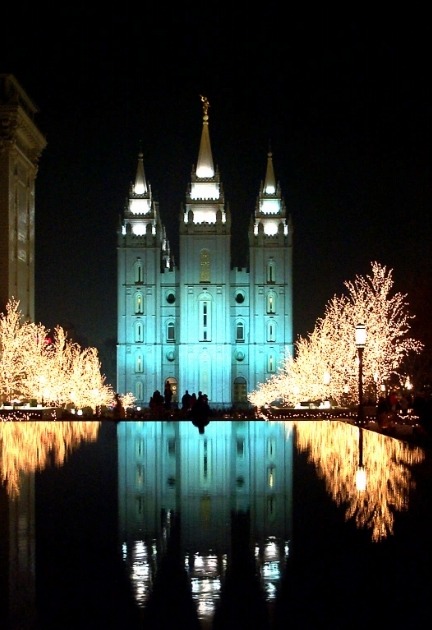
LDS Temple, Salt Lake
Once again we turn our attentions to a branch of Christianity, as Clay gives us the scoop on the LDS Church. (Even though we are moving on, feel free to continue any of the discussions on earlier posts...)
-------------------------------------------------------------------------------
Here be my answers, as an unofficial representative of the Church of Jesus Christ of Latter Day Saints (you can call us LDS for short; calling us Mormon is in a slight way derogatory and inaccurate, but it is in common use in America).
What faith do you espouse?
The faith of the Church of Jesus Christ of Latter Day Saints. Or, to put it more succinctly, I espouse faith in Jesus, the Christ.
Who was the founder of your faith? When did he/she live?
In a general sense, we'd like to think it's God. In a supra-historical sense, we believe it was old testament figures like Adam, Abraham etc that did the earthly part of the religion leading up to the fulfillment and refinement of the religion by Jesus Christ.
In a localized sense, we believe that in this dispensation Joseph Smith Jr. (1805-1844) was charged to restore the gospel on earth (LDS people believe that the fullness of the gospel and priesthood authority was lost from the earth shortly after Jesus left us and the 12 apostles were murdered/exiled). A timeline of Joseph Smith's achievements compared with U.S. events can be seen here.
What are the sacred texts of your faith?
By LDS reckoning, all holy writings we have received are slightly flawed by the process of translating infinite wisdom and eternal principles to mere human terms. Therefore, I'm not sure that we can consider any texts as literally sacred. However, LDS people look to the Old and New Testaments (the Holy Bible) and the book of Mormon for spiritual guidance. Other works of religious significance, such as the dead sea scrolls, Apocrypha, Bhagavad-Gita etc. also have religious merit and should be studied with a discerning mind.
Bonus question: The Book of Mormon? What's that?
The book of Mormon is considered by LDS people to be the "most right" (read: best translated) book of all the holy books. Joseph Smith has told us that he received directions from an angel as to the location of the plates of brass from which the book of Mormon was translated. The Book of Mormon is a history of what happened in the American region (though how much and where is up to speculation) during ancient times. It tells of two groups that migrated from the middle east to the Americas and their religious struggles.
The main theme of the book can be seen in a cycle where the righteous become prosperous, then proud, then sinful, and fall from grace, and in their humility they start to become righteous again, thus starting anew a cycle that we can see in our own lives.
Perhaps the most significant event in the Book of Mormon is the visitation of the Christ to the Americas (taking place after his Resurrection). Many LDS people see the existence of myths like Quetzaquotal as evidence of this visitation. Of course, physical evidence of Book of Mormon events is scarce and debatable, but what archeologists have found is compelling to the faithful.
Anything else while you're being so longwinded, Clay?
As a matter of fact there is. Joseph Smith provided the LDS faith with continuing revelations and scriptures. He translated Egyptian scrolls he acquired to give us The Pearl of Great Price (which retells the stories of Moses and Abraham, and with some interesting new insights). In addition, the Doctrine and Covenants is a book of latter day revelations that can still be added to, if God so directs (the President of the church would be the one to do this). Typically, LDS people combine the Book of Mormon, Pearl of Great Price, and Doctrine and Covenants into one bound book for their own studies.
One other source of holy writing is found in the transcripts of one's patriarchal blessing. Every LDS person is entitled to get such a blessing from the area's patriarch (we'll discuss that later), and that blessing is written down and kept by the blessed individual for future reference.
What is the central teaching of your faith?
Jesus said: "A new commandment I give unto you, That ye love one another; as I have loved you. By this shall all men know that ye are my disciples, if ye have love one to another." If this precept is followed, all others fall into place.
How does your faith define sin? What are the major sins, and how is one absolved?
A distinction should be made here: There is a difference between sin and transgression. Sin is any action that harms another (or yourself for that matter), while transgression is against holy law or mandate. (This is important, because it shows how LDS people do not believe Adam and Eve are sinners, but transgressors, and this helps LDS people to see Eve as a hero who performed a necessary transgression--complicated, I know).
One is absolved of either sin or transgression in many ways, including taking the sacrament and prayer. The absolution process involves recognizing the sin, praying for forgiveness, and mending one's ways.
Roughly how many adherents does your faith have?
15 million and growing by approximately 300,000 per year.
What does your faith teach about the afterlife? Is there heaven, and how do you get there?
Afterlife is a bit of a misnomer. Existence is eternal and time goes infinitely in both directions. Let me clarify, and to do that, I'll have to tell a story...
LDS people have a concept of a period of time called the pre-existence, where all of us existed as spiritual beings before our temporary, earthly existence. At some point, God, who organized our essences from primordial intelligences into spirits, let us know that we had to have an earthly existence if we wanted to be more like Him. He then asked for proposals on salvation. The being that would become known as Lucifer suggested that we should NOT have free will so that we would not risk sin and thus all return to God. The one who would become known as Jesus suggested that humans needed free will, or the ability to choose for themselves if they would disobey God and return to His presence. Lucifer was proud and wrathful, and when God decided that plan of Jesus was wise, Lucifer started an ideological war. Lucifer and his follower were eventually cast into outer darkness. So our Earthly existence is temporary, but we gain wisdom and a physical form that we will carry with us into the eternities. During our current period of time, the earth is a host to both physical and spiritual beings. Those that die during our current period are put into one of two camps, those that knew of and accepted the covenants of the gospel and those that did not accept or have the opportunity two. The first group has ministries among the second group.
However, things change a little with the coming of Judgment Day. After that period the earth will become a perfected being (we believe it has a spirit), as will the entirety of humanity, who will all be resurrected. People will then spend their existence in one of several places:
Outer Darkness: The closest LDS equivalent to hell. Lucifer and his cohorts exist in this sad place, as well as a very miniscule (only a handful) group of humans that dealt with God Himself and yet rejected him. Cain would be the only example we know of. This is not a place of eternal physical torment, but of eternal sorrow and guilt.
There are then three glories that everyone else achieves. You could think of these as different versions of heaven, enlightenment, etc. The glories are as follows:
The Telestial Kingdom: The glory of the stars, this will be the remade earth. While being the lowest of the three glories, is still a place of incomprehensible joy. This is where "bad" people go.
The Terrestrial Kingdom: The glory of the moon. Location unknown (this universe maybe?). This is where the moderately good go.
The Celestial Kingdom: The glory of the sun. Location: Probably extremely hard to define and metaphysical. The best of the best go here. And it is further divided into three strata of goodness levels. It is also often speculated (though the speculation is not by any means doctrine) that those who attain the glory of the Celestial achieve apotheosis, or a state much like it.
It is conceived that LDS families, being sealed together for all time and eternity, experience the post-mortal existence together, but how this figures into the eventuality that some will achieve higher glories than others is unknown.
One other thing should be pointed out. God, in His infinite mercy has decided that only the most virtuous attain his presence. How is this merciful? Because to be in his presence while being unworthy of it would wrack the soul with guilt. Therefore, a person in the Telestial kingdom will feel content and deserving of their eternal lot in infinity.
What are the practices of your faith? (Daily, weekly, etc.)
Daily: Pray upon rising and before sleep, and each meal, and whenever. Read scriptures. It is also beneficial to meditate upon spiritual matters and pay heed to the promptings of the Spirit.
Weekly: Attend church on Sunday and set it aside as a holy day without labors. Take the sacrament.
Monthly: Fast upon the first Sunday of the month and give the money that you would have spent on food to the poor.
How is your faith organized? Are there priests and bishops?
Indeed, but not in a Catholic sense of those words. Typically, at age 12, males are confirmed with the power and responsibility of the priesthood and given the title of deacon. They take care of simple tasks, such as collecting fast offerings (a form of alms mentioned above) and passing the sacrament.
At age 16, they become priests and their responsibilities increase (blessing sacrament, baptizing and so on).
At 19, they become elders, get more responsibility, and generally serve missions. You may notice LDS people call missionaries elders to distinguish them, though many of them, myself included, are actually elders.
A bishop is an elder chosen to serve and watch over a ward (wards are groupings of about 200 members of the faith).
Stake presidents look over and direct stakes, which are the collections of the local wards. They appoint bishops and other offices.
Mission presidents are responsible for the safety and conduct of missionaries in a given area.
The quorum of the seventy is a group in control of church issues on a more global scale. They appoint stake and mission presidents.
The quorum of the twelve is the twelve guys at the top of it all. Big decisions, appointments, and declarations come from these guys. Out of the twelve, the three oldest (in terms of age) members make up the presidency of the church with the Prophet (also known as the president) being the most influential member of these three, not to mention of the church as a whole. The prophet is the mouthpiece of God on earth, and he alone is considered to have all the keys of the priesthood. The process of becoming a prophet is relatively simple: you just have to be the oldest member of the quorum of the twelve.
The patriarch lies outside of these groupings (though he is an elder it should be pointed out). The patriarch is chosen to give patriarchal blessings to members of the stake in which he resides. In terms of power, he has very little power over the organization or direction of the church, but he still fulfills a vital and sacred position.
Are there regular services available to you locally? If so, where?
In Wyoming, there are tons of LDS churches. There are three in this town alone; I usually attend at the church on 13th street, which doubles as an institute of religion (much like a seminary).
How did you come to be a believer?
I had the good fortune to be born to a family with parents that were members of the religion. Like Most LDS people, I took the plunge and became baptized at age 8 (our age of accountability), and became a member.
What do you wish others knew about your faith?
Oh so much. I wish they knew that Mormons espouse Christian virtues. I wish the British didn't believe we have horns on our head. I wish they knew that LDS people are encouraged to explore the concepts of other religions and find their divine merits. I wish people knew that we constantly renew our beliefs and religious reform does happen. I wish people knew that we embrace minorities, and in fact have more members outside the U.S. than within. Not all of the LDS peoples live in Utah (the state in the U.S. with the greatest number of members is in fact California). I wish that people knew the priesthood is not some form of misogynist control, and in fact a bit of a burden to the males. I wish people knew that LDS people believe in a heavenly mother as well as a heavenly father.
--------------------------------------------------------------------------
As always, comments are welcome here, or on his blog. If you have a
question of a more personal nature, Email it to the address on my
profile and I will pass it along.


 Posts
Posts

